Accessories, made in Australia.
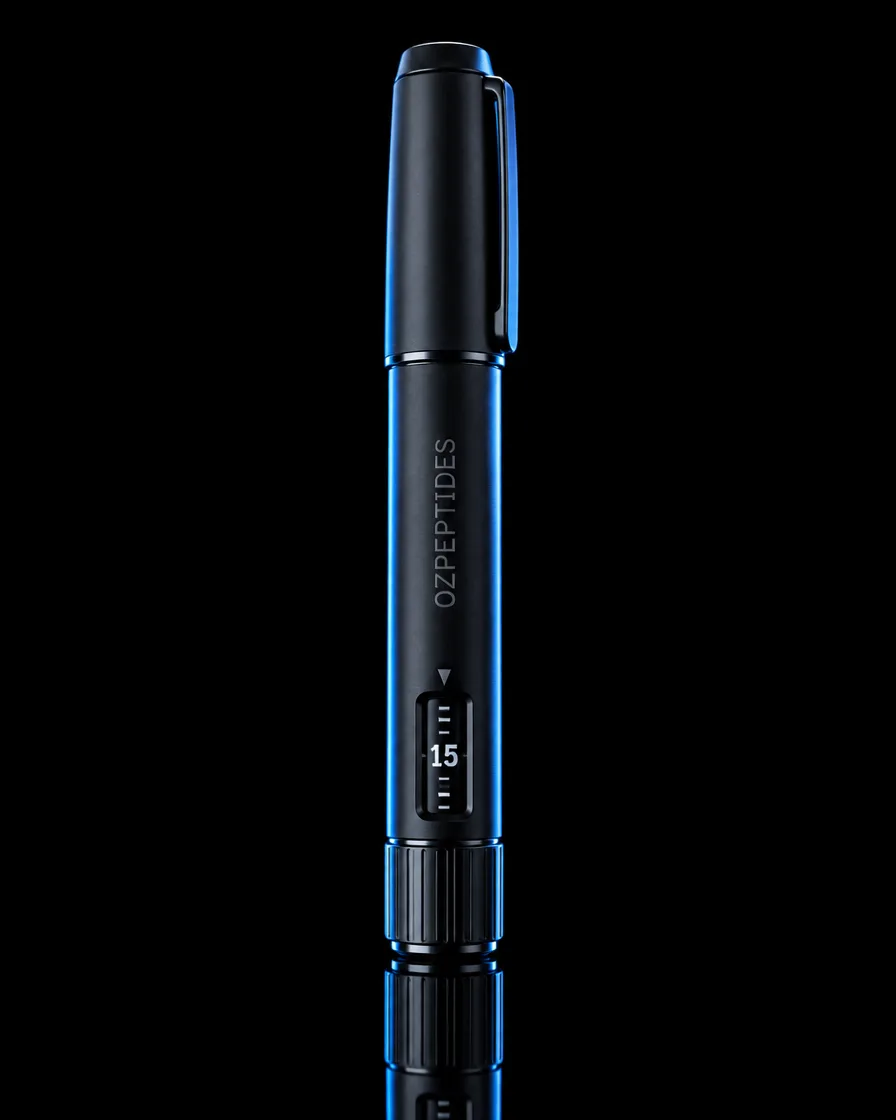
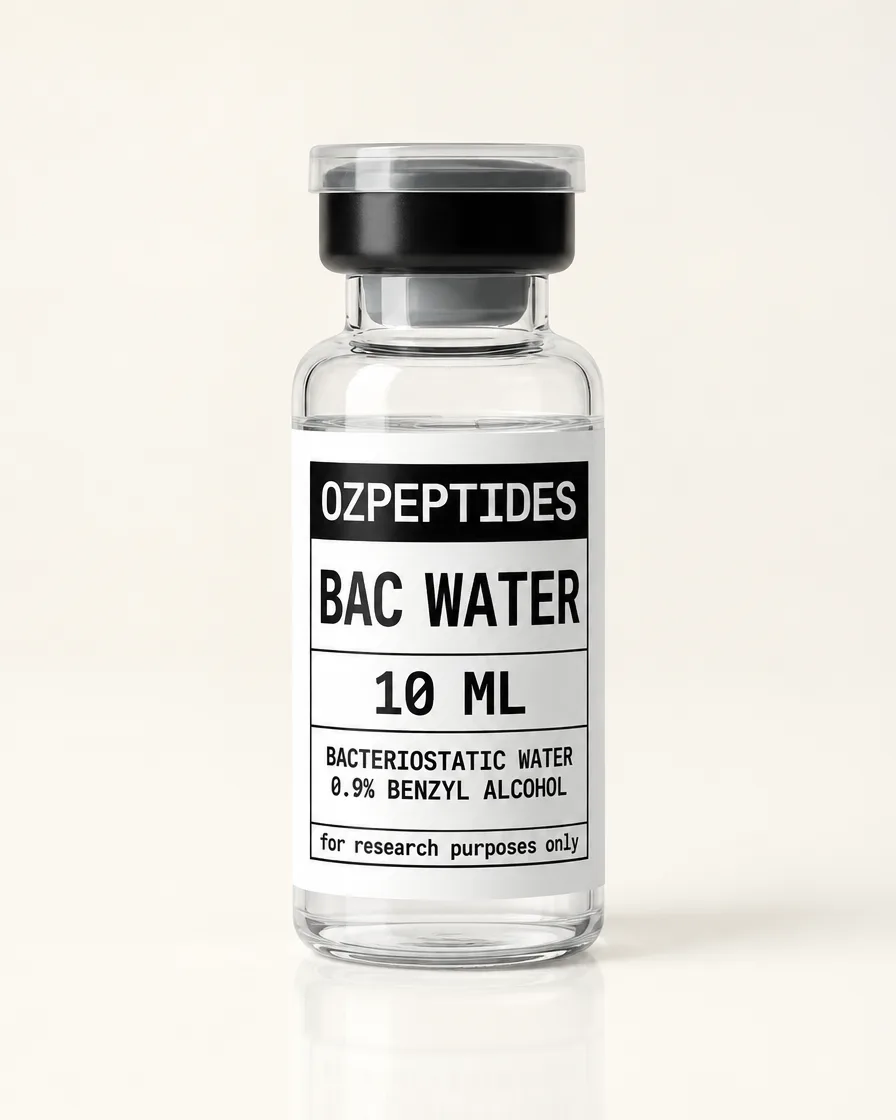
Research equipment including reusable metal pens and bacteriostatic water.
The hardware and diluent that go with the vials. Bacteriostatic water is what turns a lyophilised vial into a solution that can be drawn from over weeks; the metal pens take pre-filled cartridges. Neither is a peptide, and the questions worth asking about them are different from the questions about the catalogue.
What bacteriostatic water actually is
Bacteriostatic water is water for injection with 0.9% benzyl alcohol added. The benzyl alcohol inhibits bacterial growth, which is what allows a vial to be entered repeatedly over weeks rather than once.
Sterile water contains no preservative. It is sterile at the moment it is opened and offers nothing against contamination introduced afterwards, which is why a vial reconstituted with sterile water should be treated as single-use. That difference is also a real cost over time: a vial that cannot be stored is a vial that has to be used or wasted.
It inhibits growth rather than sterilising. Wipe the stopper with alcohol before each entry and use a fresh needle every time — bacteriostatic water will not rescue a vial repeatedly entered with a used one.
How much bacteriostatic water a vial needs
There is no single correct amount, because the volume sets the concentration rather than the quantity of peptide. A 10MG vial holds 10MG whether it is reconstituted with 1ML, 2ML or 3ML — what changes is how much liquid each draw has to be.
The practical rule is to pick a volume that puts a typical draw somewhere in the middle of the syringe. A one-unit draw is hard to measure accurately; an eighty-unit draw empties the vial quickly. Round numbers help: 10MG in 2ML gives 5MG/ML, which makes 500mcg exactly ten units on a 100-unit syringe.
Vial capacity is the other constraint — most peptide vials are 2ML or 3ML and cannot hold more. The reconstitution calculator does this arithmetic per SKU rather than generically.
The metal pens
The pens are imported hardware, not something we make, and they are the one product in this catalogue that is not manufactured in our Australian lab. They take pre-filled cartridges rather than plain vials.
They come in four finishes — black, pink, purple and silver — and the finish is the only difference between them. There are no strengths, because a pen is not a peptide: it is the device the cartridge goes into.
Any peptide we stock can be supplied as a pen cartridge at no extra cost (or $5 more per vial while a sale is running), reconstituted here so it arrives as a solution ready for the pen.
Plain, pre-mixed or cartridge
A plain lyophilised vial keeps longest, because a freeze-dried peptide stored cold and dry outlasts the same peptide in solution by a wide margin. It needs bacteriostatic water, which is why the two are usually bought together.
Mixed in vial arrives reconstituted, which removes the handling step where most errors happen — directing diluent down the side, swirling rather than shaking, waiting for the cake to dissolve fully. Pen cartridges arrive reconstituted too and fit the pens.
Both mixed formats cost nothing extra (or $5 more per vial while a sale is running). Neither needs bacteriostatic water.
Storage and shelf life
Unopened bacteriostatic water is stable at room temperature for a long period. Once a reconstituted vial exists, it belongs in the refrigerator and out of light, and for most peptides the useful window is weeks rather than days or months.
Freezing a reconstituted vial is not an improvement: freeze-thaw cycles denature peptides, and the benzyl alcohol that protects a refrigerated vial does nothing for one that has been frozen and thawed. A few compounds are shorter-lived in solution than the general rule — NAD+ hydrolyses in water, glutathione oxidises on air exposure — and their guides say so.
Frequently asked
What is bacteriostatic water?
Water for injection with 0.9% benzyl alcohol added. The benzyl alcohol inhibits bacterial growth, so a reconstituted vial keeps for weeks rather than one use.
Can I use sterile water instead?
You can, but treat the vial as single-use. Sterile water has no preservative and offers nothing against contamination introduced after opening.
Do the metal pens come in different strengths?
No. A pen is a device, not a peptide. The four finishes are the only difference between them.
Are the pens made in Australia?
No. The pens are imported hardware. The peptides that go in the cartridges are made in our Australian lab.
Accessories
Reusable pens and reconstitution supplies.
The hardware and diluent that go with the vials. Bacteriostatic water is what turns a lyophilised vial into a solution that can be drawn from over weeks; the metal pens take pre-filled cartridges. Neither is a peptide, and the questions worth asking about them are different from the questions about the catalogue.
What bacteriostatic water actually is
Bacteriostatic water is water for injection with 0.9% benzyl alcohol added. The benzyl alcohol inhibits bacterial growth, which is what allows a vial to be entered repeatedly over weeks rather than once.
Sterile water contains no preservative. It is sterile at the moment it is opened and offers nothing against contamination introduced afterwards, which is why a vial reconstituted with sterile water should be treated as single-use. That difference is also a real cost over time: a vial that cannot be stored is a vial that has to be used or wasted.
It inhibits growth rather than sterilising. Wipe the stopper with alcohol before each entry and use a fresh needle every time — bacteriostatic water will not rescue a vial repeatedly entered with a used one.
How much bacteriostatic water a vial needs
There is no single correct amount, because the volume sets the concentration rather than the quantity of peptide. A 10MG vial holds 10MG whether it is reconstituted with 1ML, 2ML or 3ML — what changes is how much liquid each draw has to be.
The practical rule is to pick a volume that puts a typical draw somewhere in the middle of the syringe. A one-unit draw is hard to measure accurately; an eighty-unit draw empties the vial quickly. Round numbers help: 10MG in 2ML gives 5MG/ML, which makes 500mcg exactly ten units on a 100-unit syringe.
Vial capacity is the other constraint — most peptide vials are 2ML or 3ML and cannot hold more. The reconstitution calculator does this arithmetic per SKU rather than generically.
The metal pens
The pens are imported hardware, not something we make, and they are the one product in this catalogue that is not manufactured in our Australian lab. They take pre-filled cartridges rather than plain vials.
They come in four finishes — black, pink, purple and silver — and the finish is the only difference between them. There are no strengths, because a pen is not a peptide: it is the device the cartridge goes into.
Any peptide we stock can be supplied as a pen cartridge at no extra cost (or $5 more per vial while a sale is running), reconstituted here so it arrives as a solution ready for the pen.
Plain, pre-mixed or cartridge
A plain lyophilised vial keeps longest, because a freeze-dried peptide stored cold and dry outlasts the same peptide in solution by a wide margin. It needs bacteriostatic water, which is why the two are usually bought together.
Mixed in vial arrives reconstituted, which removes the handling step where most errors happen — directing diluent down the side, swirling rather than shaking, waiting for the cake to dissolve fully. Pen cartridges arrive reconstituted too and fit the pens.
Both mixed formats cost nothing extra (or $5 more per vial while a sale is running). Neither needs bacteriostatic water.
Storage and shelf life
Unopened bacteriostatic water is stable at room temperature for a long period. Once a reconstituted vial exists, it belongs in the refrigerator and out of light, and for most peptides the useful window is weeks rather than days or months.
Freezing a reconstituted vial is not an improvement: freeze-thaw cycles denature peptides, and the benzyl alcohol that protects a refrigerated vial does nothing for one that has been frozen and thawed. A few compounds are shorter-lived in solution than the general rule — NAD+ hydrolyses in water, glutathione oxidises on air exposure — and their guides say so.
Frequently asked
What is bacteriostatic water?
Water for injection with 0.9% benzyl alcohol added. The benzyl alcohol inhibits bacterial growth, so a reconstituted vial keeps for weeks rather than one use.
Can I use sterile water instead?
You can, but treat the vial as single-use. Sterile water has no preservative and offers nothing against contamination introduced after opening.
Do the metal pens come in different strengths?
No. A pen is a device, not a peptide. The four finishes are the only difference between them.
Are the pens made in Australia?
No. The pens are imported hardware. The peptides that go in the cartridges are made in our Australian lab.