Tissue repair, made in Australia.
Tissue repair research peptides including BPC-157, TB-500 (thymosin beta-4), KPV and pre-blended stacks. Made in Australia, batch-tested, shipped same day.
Five compounds studied in tissue repair research, addressing different stages of the same process: cells reaching a site, blood supply developing there, and inflammation being restrained. None is approved for human use anywhere and none has substantial human clinical data — the literature here is preclinical, and being clear about that is more useful than the alternative.
What links these compounds
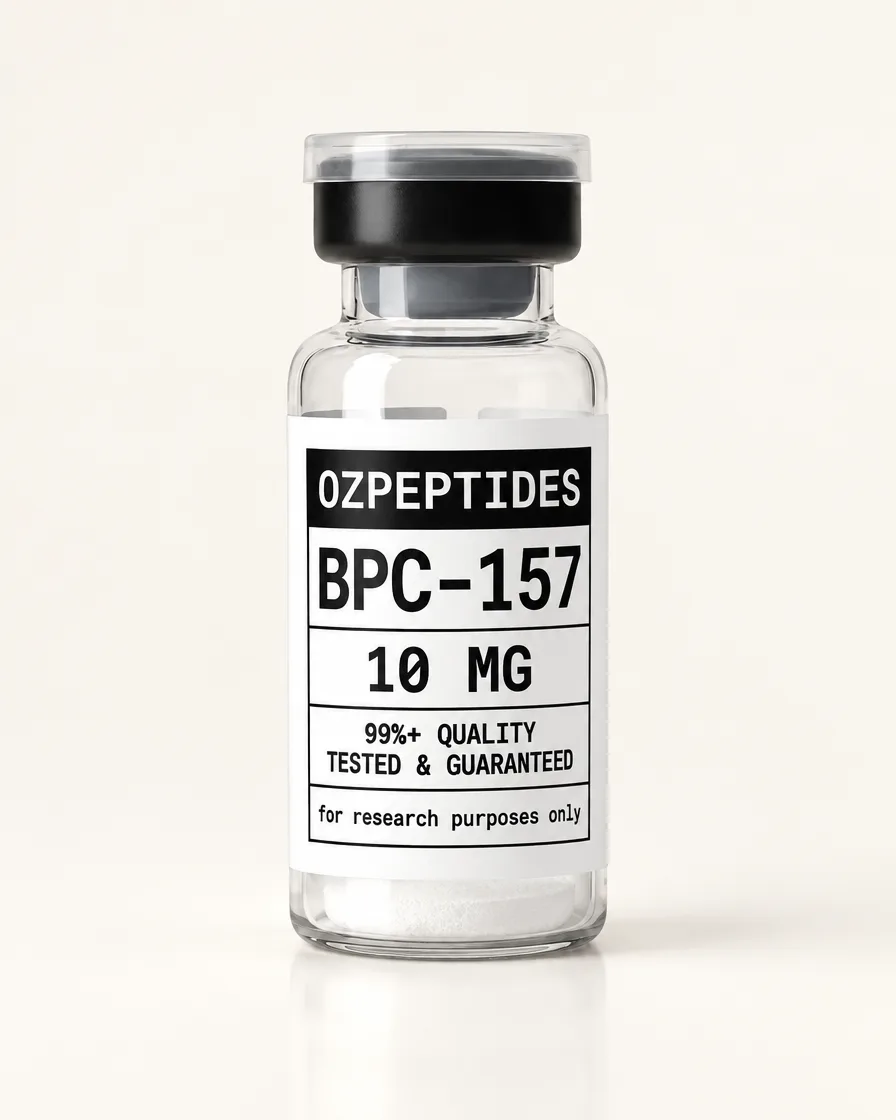
Tissue repair requires several things at once, and these compounds are associated with different parts of it. TB-500 reproduces the actin-binding region of thymosin beta-4, and cell migration depends on continuous actin assembly and disassembly — cells have to arrive before anything is rebuilt. BPC-157 is associated with angiogenesis and growth-factor signalling, chiefly through reported effects on VEGF receptor 2 expression. KPV is the anti-inflammatory fragment of alpha-MSH.
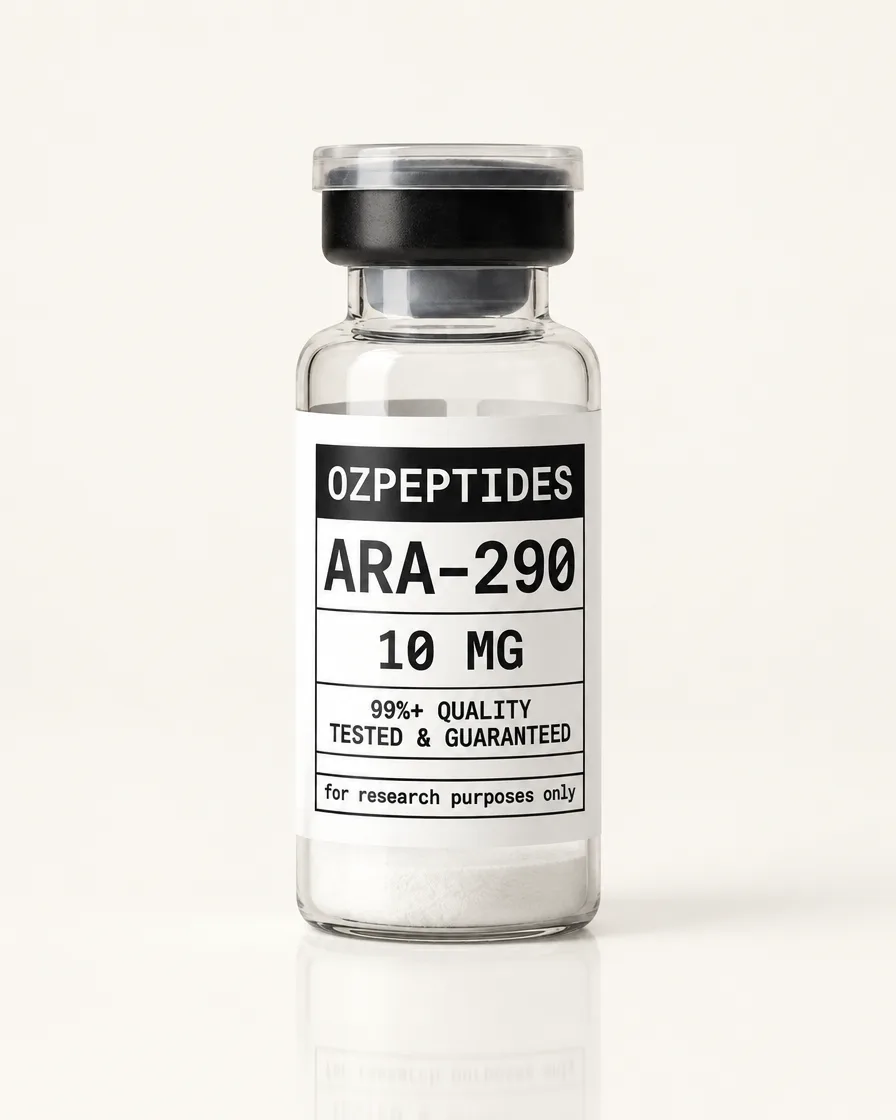
ARA-290 comes from a different direction entirely: an erythropoietin fragment designed to engage the proposed tissue-protective receptor complex without the red blood cell effect. The Wolverine blend combines BPC-157 and TB-500 in one vial.
That division of labour is why these compounds are routinely used together, and it is a mechanistic argument rather than a tested one.
Where the evidence is, and where it is not
BPC-157 has the largest literature in the category — hundreds of papers across tendon, ligament, muscle, gut and nerve models. Two qualifications matter: it is almost entirely rodent work, and it comes overwhelmingly from a small cluster of collaborating groups, with thin independent replication.
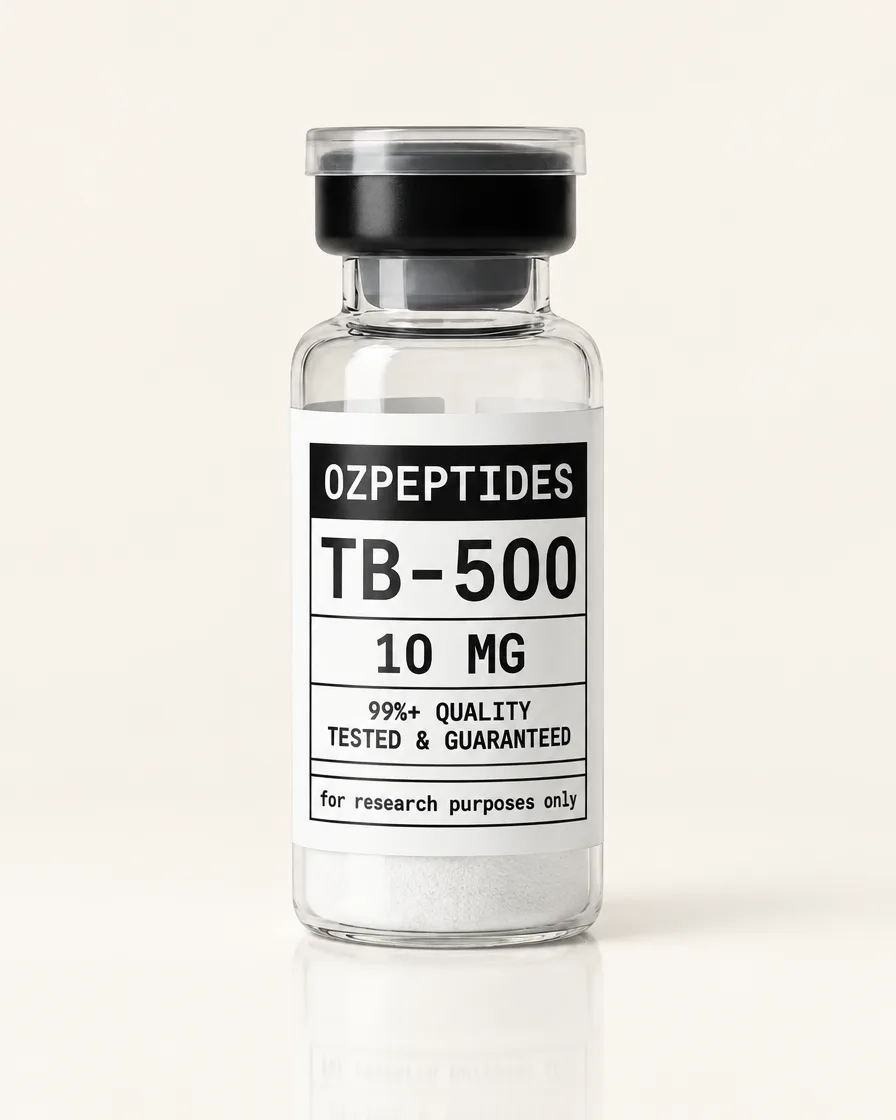
TB-500 has less in its own name than its reputation suggests. Most of the peer-reviewed work, including the clinical trials in dry eye and venous stasis ulcers, was run on the full thymosin beta-4 protein rather than the fragment sold as TB-500. Citing those trials for TB-500 transfers results between two different molecules.
ARA-290 is the outlier with real human data: published trials as cibinetide in sarcoidosis-associated small fibre neuropathy, and orphan drug designations — but no registration. KPV's evidence is mouse colitis models and cell culture, with human data essentially absent.
What is known about mechanism, and what is inferred
BPC-157 has no identified receptor. Its reported mechanisms are downstream observations rather than a binding target, which is a genuine gap and not a small one — it means every mechanistic claim in circulation is an inference. A compound without an identified target is not thereby fake; plenty of useful drugs preceded their mechanism.
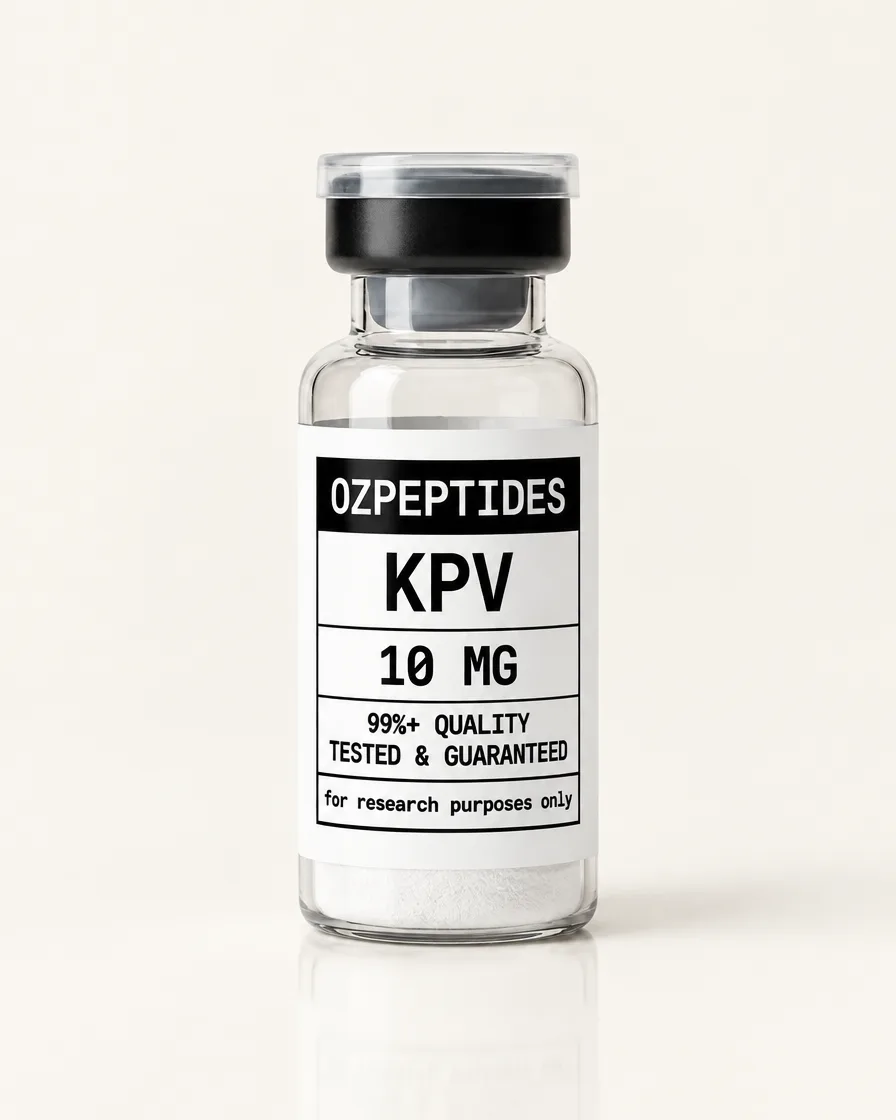
KPV is the opposite case: an unusually specific proposed mechanism, entering cells through the PepT1 transporter and reducing NF-κB activation, on a thin evidence base. ARA-290's innate repair receptor model is elegant and not universally accepted.
TB-500's actin story is the best-grounded of the four, because thymosin beta-4 is the principal actin-sequestering protein in mammalian cells and the biochemistry is not in dispute.
Blends and what they actually offer
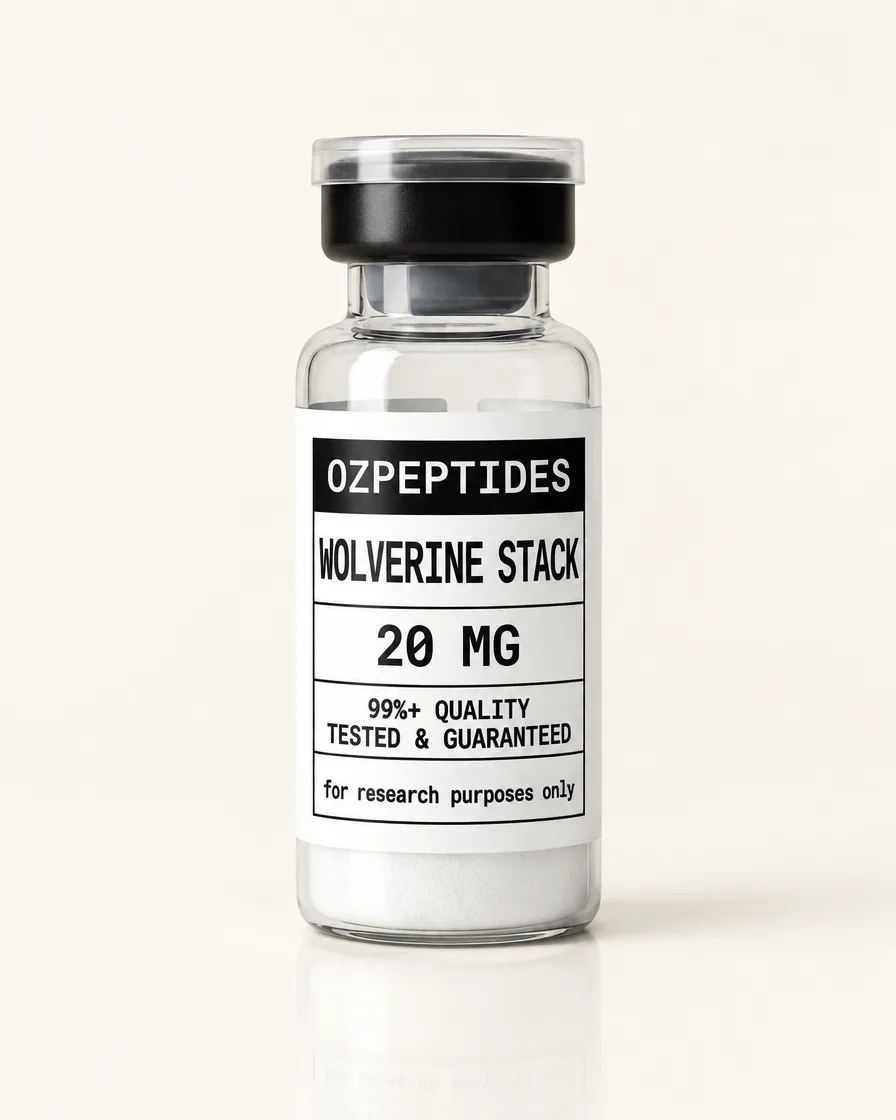
The Wolverine blend pairs BPC-157 and TB-500 in one vial. No published study covers the combination, and the evidence for a combination is not the sum of the evidence for its parts — interactions can be additive, redundant or antagonistic, and only a study of the combination distinguishes them.
What a blend reliably changes is handling: one reconstitution instead of two, one ratio identical in every vial, and a certificate covering the finished product rather than two inputs that were never tested together. That is a real and defensible benefit, and it is a different claim from a therapeutic one.
Anti-doping status
This is the category where sport matters most, and the answer is unambiguous. BPC-157 is listed by WADA under S0, the catch-all for substances with no human therapeutic approval. TB-500 is listed under S2, which covers growth factors affecting muscle, tendon or ligament repair. Both are prohibited at all times, in and out of competition, and anti-doping laboratories have detection methods for both.
KPV and ARA-290 have no approval for human use anywhere, which engages S0 independently. The Wolverine blend inherits the status of both its components. There is no compound in this category that is permissible for an athlete subject to the World Anti-Doping Code.
What to check before buying
These are short, inexpensive syntheses, which has two consequences. A genuine batch should test very clean, so a mediocre purity figure on BPC-157 or TB-500 says something about the supplier rather than about the chemistry. And because the peptides themselves are cheap, the realistic failure is underfilling rather than adulteration — a vial containing a fraction of its stated weight, which passes purity testing without difficulty.
TB-500 carries an additional identity question, since it is sold under names that also refer to thymosin beta-4, a much larger molecule with a very different mass. Mass spectrometry settles it. We make all five in Blacktown, NSW, at ≥99% HPLC purity with 0 ppm heavy metals.
Frequently asked
Does BPC-157 have a known receptor?
No. Its reported mechanisms come from downstream observations rather than an identified binding target.
Is TB-500 the same as thymosin beta-4?
No. Thymosin beta-4 is a 43-amino-acid protein; TB-500 reproduces its actin-binding region, and the clinical trials usually cited were run on the protein.
Are these compounds banned in sport?
Yes. BPC-157 under WADA S0 and TB-500 under S2, both prohibited at all times. KPV and ARA-290 fall under S0 as unapproved substances.
Which has real human data?
ARA-290, as cibinetide, with published trials in small fibre neuropathy and orphan designations — though no registration anywhere.
Tissue repair
BPC-157, TB-500 and blends for tissue and recovery research.
Five compounds studied in tissue repair research, addressing different stages of the same process: cells reaching a site, blood supply developing there, and inflammation being restrained. None is approved for human use anywhere and none has substantial human clinical data — the literature here is preclinical, and being clear about that is more useful than the alternative.
What links these compounds
Tissue repair requires several things at once, and these compounds are associated with different parts of it. TB-500 reproduces the actin-binding region of thymosin beta-4, and cell migration depends on continuous actin assembly and disassembly — cells have to arrive before anything is rebuilt. BPC-157 is associated with angiogenesis and growth-factor signalling, chiefly through reported effects on VEGF receptor 2 expression. KPV is the anti-inflammatory fragment of alpha-MSH.
ARA-290 comes from a different direction entirely: an erythropoietin fragment designed to engage the proposed tissue-protective receptor complex without the red blood cell effect. The Wolverine blend combines BPC-157 and TB-500 in one vial.
That division of labour is why these compounds are routinely used together, and it is a mechanistic argument rather than a tested one.
Where the evidence is, and where it is not
BPC-157 has the largest literature in the category — hundreds of papers across tendon, ligament, muscle, gut and nerve models. Two qualifications matter: it is almost entirely rodent work, and it comes overwhelmingly from a small cluster of collaborating groups, with thin independent replication.
TB-500 has less in its own name than its reputation suggests. Most of the peer-reviewed work, including the clinical trials in dry eye and venous stasis ulcers, was run on the full thymosin beta-4 protein rather than the fragment sold as TB-500. Citing those trials for TB-500 transfers results between two different molecules.
ARA-290 is the outlier with real human data: published trials as cibinetide in sarcoidosis-associated small fibre neuropathy, and orphan drug designations — but no registration. KPV's evidence is mouse colitis models and cell culture, with human data essentially absent.
What is known about mechanism, and what is inferred
BPC-157 has no identified receptor. Its reported mechanisms are downstream observations rather than a binding target, which is a genuine gap and not a small one — it means every mechanistic claim in circulation is an inference. A compound without an identified target is not thereby fake; plenty of useful drugs preceded their mechanism.
KPV is the opposite case: an unusually specific proposed mechanism, entering cells through the PepT1 transporter and reducing NF-κB activation, on a thin evidence base. ARA-290's innate repair receptor model is elegant and not universally accepted.
TB-500's actin story is the best-grounded of the four, because thymosin beta-4 is the principal actin-sequestering protein in mammalian cells and the biochemistry is not in dispute.
Blends and what they actually offer
The Wolverine blend pairs BPC-157 and TB-500 in one vial. No published study covers the combination, and the evidence for a combination is not the sum of the evidence for its parts — interactions can be additive, redundant or antagonistic, and only a study of the combination distinguishes them.
What a blend reliably changes is handling: one reconstitution instead of two, one ratio identical in every vial, and a certificate covering the finished product rather than two inputs that were never tested together. That is a real and defensible benefit, and it is a different claim from a therapeutic one.
Anti-doping status
This is the category where sport matters most, and the answer is unambiguous. BPC-157 is listed by WADA under S0, the catch-all for substances with no human therapeutic approval. TB-500 is listed under S2, which covers growth factors affecting muscle, tendon or ligament repair. Both are prohibited at all times, in and out of competition, and anti-doping laboratories have detection methods for both.
KPV and ARA-290 have no approval for human use anywhere, which engages S0 independently. The Wolverine blend inherits the status of both its components. There is no compound in this category that is permissible for an athlete subject to the World Anti-Doping Code.
What to check before buying
These are short, inexpensive syntheses, which has two consequences. A genuine batch should test very clean, so a mediocre purity figure on BPC-157 or TB-500 says something about the supplier rather than about the chemistry. And because the peptides themselves are cheap, the realistic failure is underfilling rather than adulteration — a vial containing a fraction of its stated weight, which passes purity testing without difficulty.
TB-500 carries an additional identity question, since it is sold under names that also refer to thymosin beta-4, a much larger molecule with a very different mass. Mass spectrometry settles it. We make all five in Blacktown, NSW, at ≥99% HPLC purity with 0 ppm heavy metals.
Frequently asked
Does BPC-157 have a known receptor?
No. Its reported mechanisms come from downstream observations rather than an identified binding target.
Is TB-500 the same as thymosin beta-4?
No. Thymosin beta-4 is a 43-amino-acid protein; TB-500 reproduces its actin-binding region, and the clinical trials usually cited were run on the protein.
Are these compounds banned in sport?
Yes. BPC-157 under WADA S0 and TB-500 under S2, both prohibited at all times. KPV and ARA-290 fall under S0 as unapproved substances.
Which has real human data?
ARA-290, as cibinetide, with published trials in small fibre neuropathy and orphan designations — though no registration anywhere.