Skin, made in Australia.
Skin and cosmetic research peptides including GHK-Cu, AHK-Cu, SNAP8 and the GLOW and KLOW blends.
Five products built around copper delivery and tissue repair. Two are copper peptides differing by a single methyl group and by five decades of research; two are multi-component blends; one is a cosmetic ingredient with an entirely different mechanism. The copper chemistry is what most of this category has in common, and it changes how quality is assessed.
Why the copper is the active part
GHK-Cu and AHK-Cu bind copper(II) through histidine and lysine residues, and the complex is what does the work. Copper is a required cofactor for lysyl oxidase, the enzyme that crosslinks collagen and elastin into load-bearing structure, and for superoxide dismutase, one of the cell's antioxidant enzymes.
Free copper is toxic and tightly controlled in the body, so a carrier that binds it firmly enough to transport and loosely enough to hand over is genuinely useful. GHK binds copper at physiological pH with an affinity that allows exchange with cellular carriers rather than holding it inert — firm but not final.
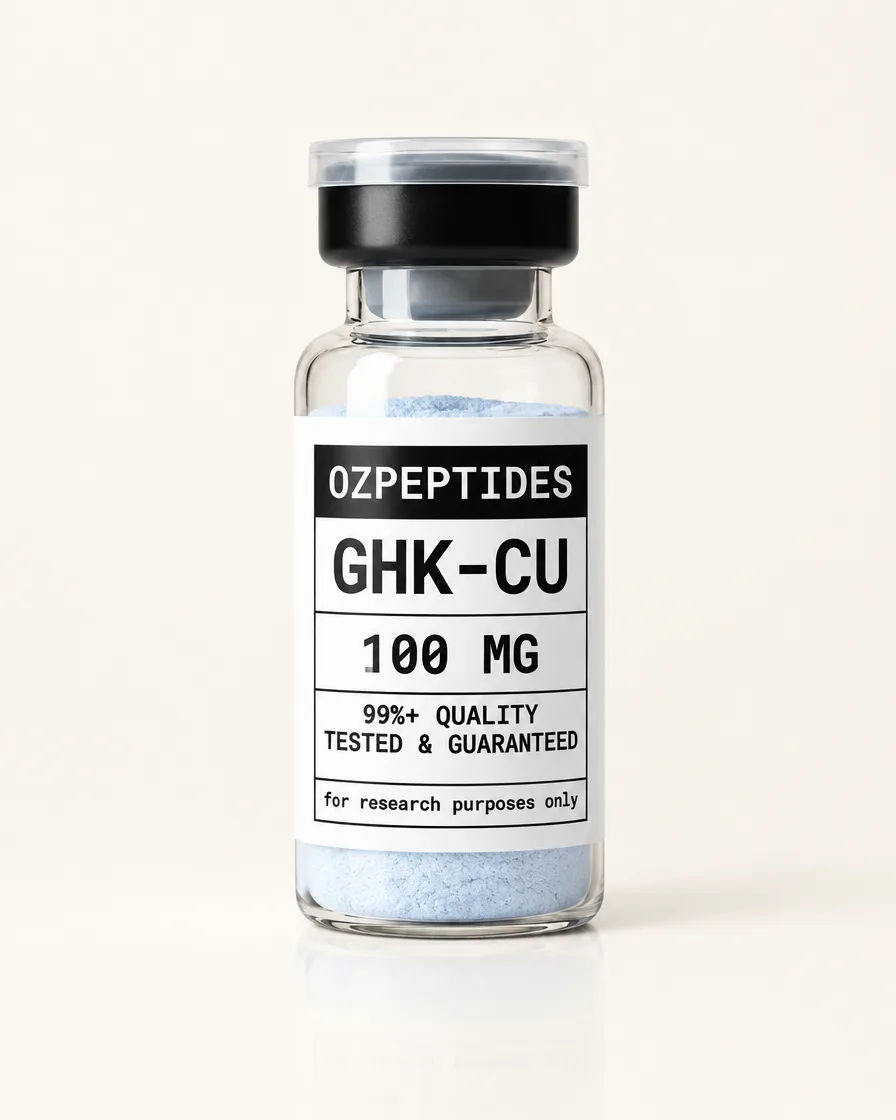
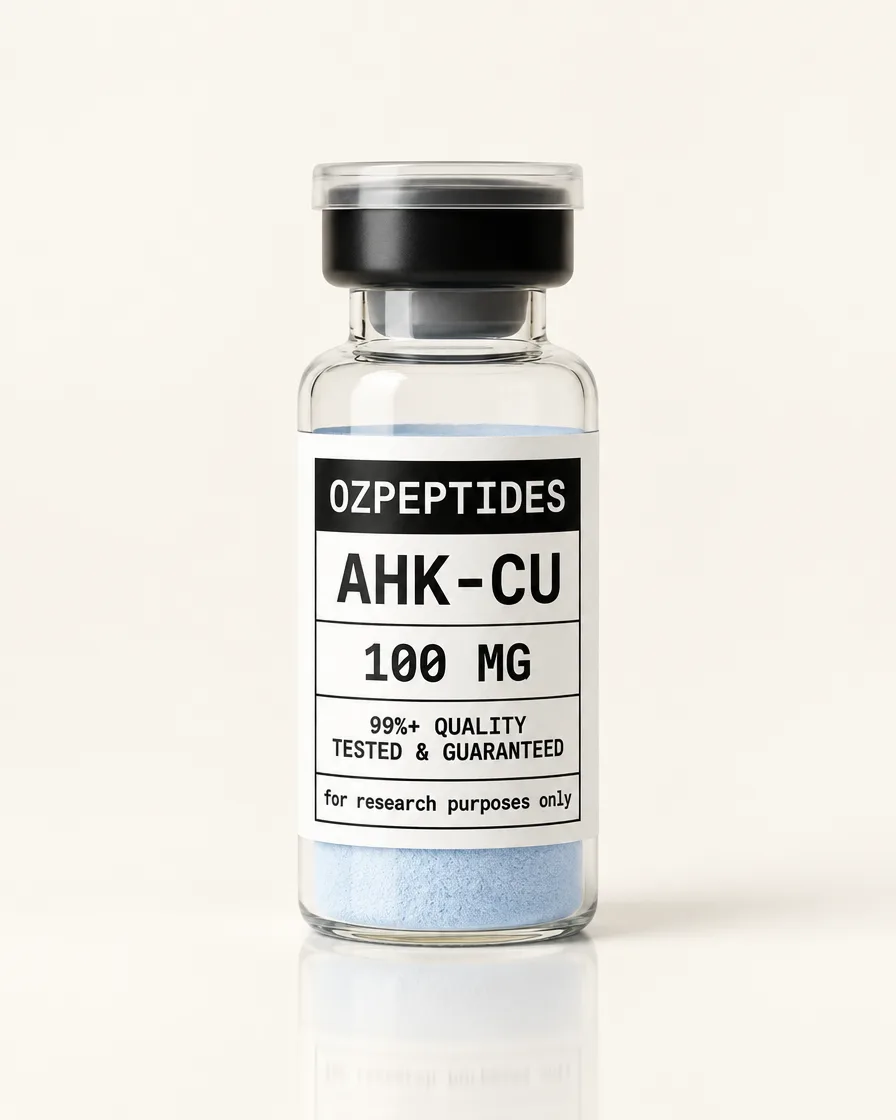
Under-complexed material is the common quality failure and an invisible one: the blue colour comes from the complex itself, so a vial short of copper can still look right. A solution that has lost its tint has lost the complex, which is the one visual check that tells you something.
GHK-Cu and AHK-Cu are not interchangeable
They differ by one methyl group — 14 daltons, trivial for mass spectrometry to resolve and invisible to a purity figure, which can read 99% on the wrong peptide.
The evidential difference is not trivial at all. GHK was isolated from human plasma in 1973, and plasma concentrations fall substantially with age — the observation five decades of skin and wound-healing research grew from. AHK-Cu is a designed analogue with a small in-vitro literature, mostly on dermal papilla cells and follicle elongation, which is why cosmetic interest in it centres on hair.
No tidy mechanistic explanation exists for why one should favour follicles and the other dermis, since the copper chemistry is essentially shared. Treating that difference as established reads more into a small body of work than it supports.
What the blends contain, and what they do not prove
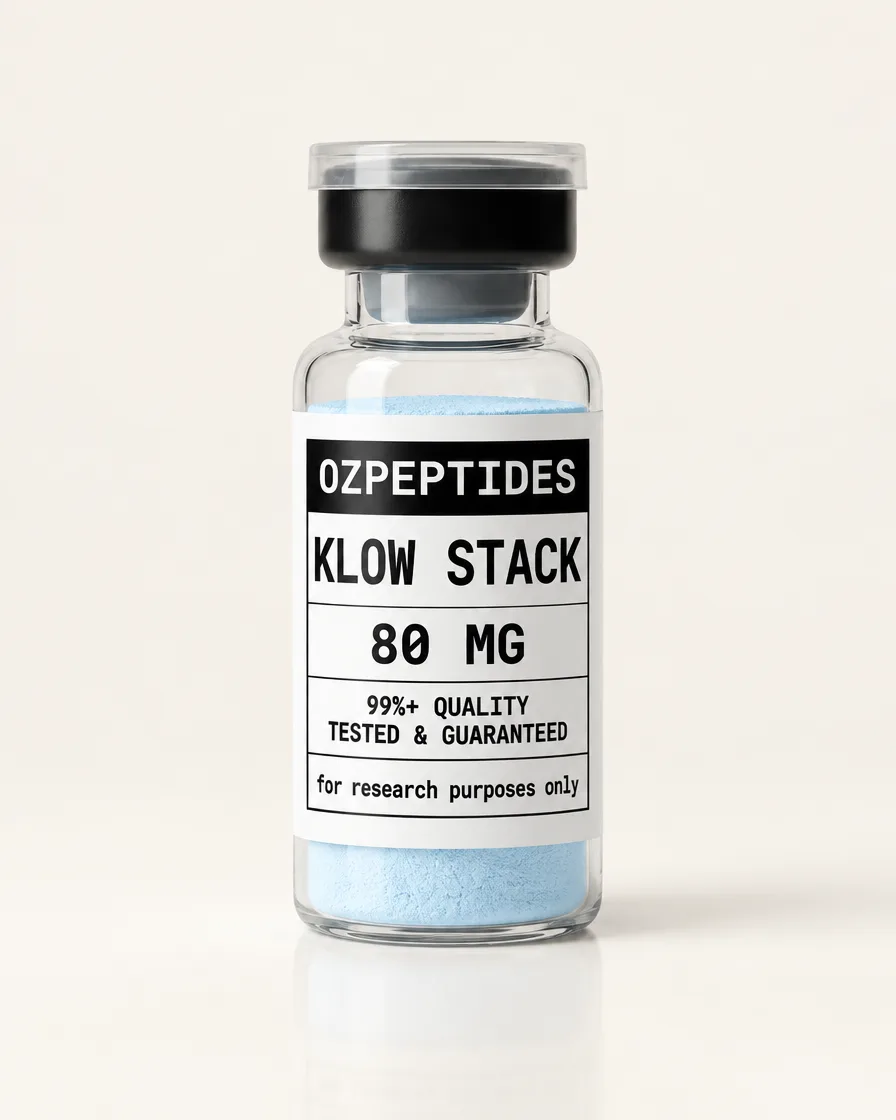
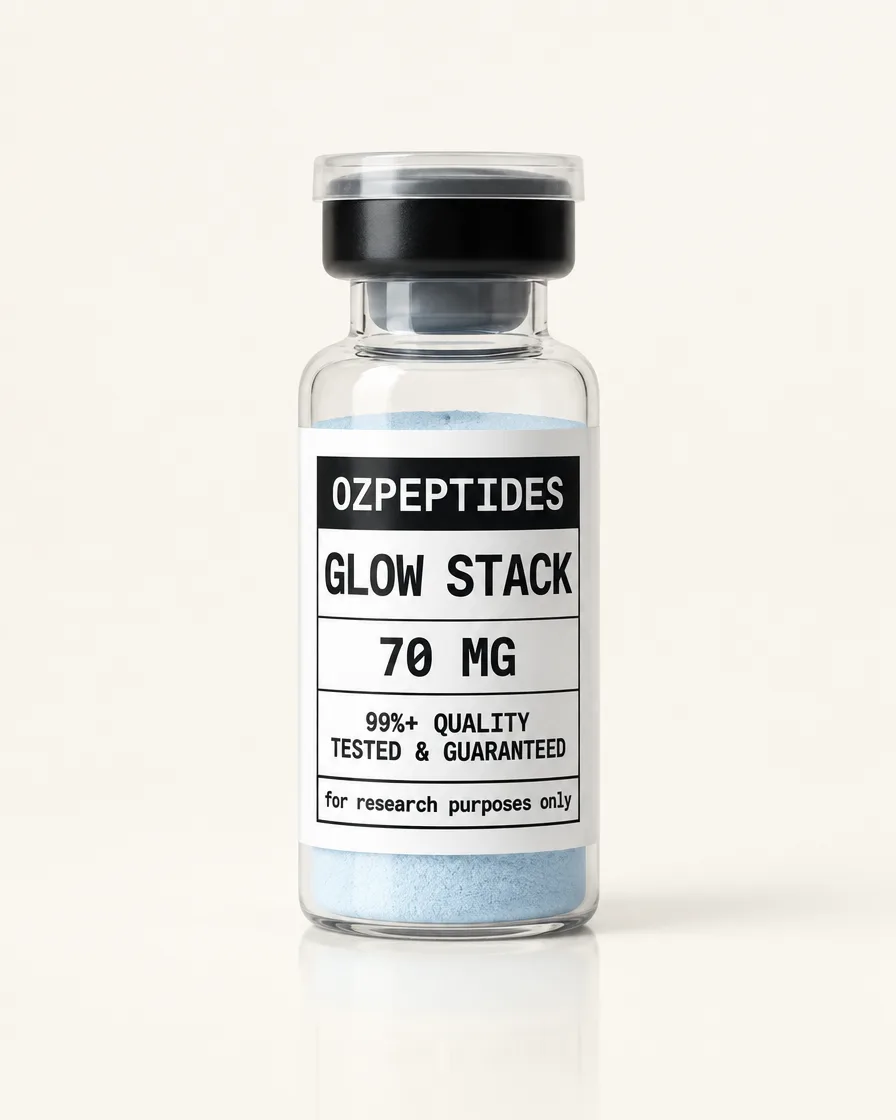
GLOW is GHK-Cu, BPC-157 and TB-500 at 70MG total peptide. KLOW adds KPV, an anti-inflammatory tripeptide, at 80MG total. Each component addresses a different requirement: copper for collagen crosslinking, actin binding for cell migration, angiogenesis for blood supply, and in KLOW's case inflammation.
No published study covers either blend. The argument for combining them is mechanistic — different stages of the same process — and a reasonable hypothesis is not a result. Anyone describing a four-way blend as proven is describing something that does not exist.
What a blend reliably changes is handling: one reconstitution instead of three or four, one ratio identical in every vial, and one tested finished product rather than several separately certified inputs that were never tested together.
SNAP-8 is a different category of product
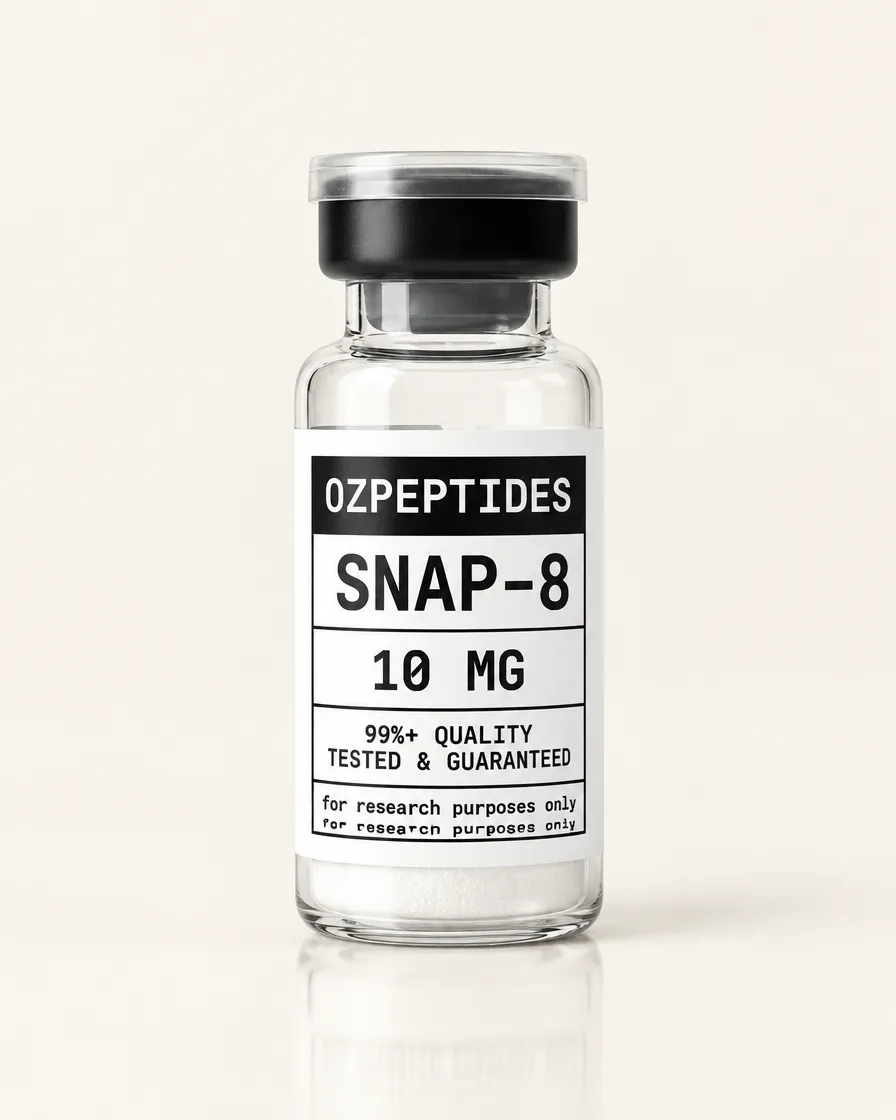
SNAP-8 is a cosmetic ingredient, not a therapeutic peptide with a clinical programme. It is proposed to interfere with SNARE complex formation — the machinery that lets vesicles fuse with the cell membrane to release neurotransmitter — by mimicking the N-terminal end of SNAP-25.
Its evidence is cosmetic-industry evidence: supplier-run studies and in-vitro work rather than independent peer-reviewed trials. The weakest link is delivery: a charged octapeptide is a poor candidate for crossing the stratum corneum, and reaching an intracellular protein complex at the neuromuscular junction is a further step the independent literature does not settle.
How copper peptides are tested
Heavy-metal screening needs the copper accounted for separately, and this is the point most suppliers gloss. The copper in the complex belongs there; the contaminants that must read zero are lead, mercury, arsenic and cadmium. A single combined "heavy metals" figure that does not distinguish the two is not telling you anything useful.
Identity matters more here than in most categories, with two similarly named copper peptides sold side by side at similar prices. For the blends, testing the finished product rather than the inputs is what makes the ratio on the certificate the ratio in the vial.
We make all five in Blacktown, NSW, at ≥99% HPLC purity with 0 ppm contaminant metals, measured separately from the complexed copper.
Handling copper peptides
Copper complexes are light-sensitive, so a reconstituted vial belongs in the dark rather than on a bench. That matters more here than for most of the catalogue, and the blue colour gives a rough real-time indication of whether the complex has survived.
Bacteriostatic water rather than sterile water gives a multi-draw window of weeks; the usual swirl-not-shake rule applies, since foaming indicates denatured peptide and in a blend there is no telling which component was affected. Copper peptides are also among the compounds most often ordered pre-mixed, which costs nothing extra (or $5 more per vial while a sale is running).
Frequently asked
Why does a copper peptide solution turn clear?
It has lost the complex. The blue colour comes from the complex itself, which is why reconstituted vials belong in the dark.
How is GHK-Cu different from AHK-Cu?
By one methyl group, 14 daltons — and by five decades of research against a small in-vitro literature.
What is the difference between KLOW and GLOW?
KLOW adds KPV, an anti-inflammatory tripeptide, at 80MG total peptide. GLOW is the other three at 70MG.
How should heavy metals be reported for a copper peptide?
Separately from the copper that belongs there. Lead, mercury, arsenic and cadmium must read zero; a combined figure hides them.
Skin
Copper peptides and blends for skin research.
Five products built around copper delivery and tissue repair. Two are copper peptides differing by a single methyl group and by five decades of research; two are multi-component blends; one is a cosmetic ingredient with an entirely different mechanism. The copper chemistry is what most of this category has in common, and it changes how quality is assessed.
Why the copper is the active part
GHK-Cu and AHK-Cu bind copper(II) through histidine and lysine residues, and the complex is what does the work. Copper is a required cofactor for lysyl oxidase, the enzyme that crosslinks collagen and elastin into load-bearing structure, and for superoxide dismutase, one of the cell's antioxidant enzymes.
Free copper is toxic and tightly controlled in the body, so a carrier that binds it firmly enough to transport and loosely enough to hand over is genuinely useful. GHK binds copper at physiological pH with an affinity that allows exchange with cellular carriers rather than holding it inert — firm but not final.
Under-complexed material is the common quality failure and an invisible one: the blue colour comes from the complex itself, so a vial short of copper can still look right. A solution that has lost its tint has lost the complex, which is the one visual check that tells you something.
GHK-Cu and AHK-Cu are not interchangeable
They differ by one methyl group — 14 daltons, trivial for mass spectrometry to resolve and invisible to a purity figure, which can read 99% on the wrong peptide.
The evidential difference is not trivial at all. GHK was isolated from human plasma in 1973, and plasma concentrations fall substantially with age — the observation five decades of skin and wound-healing research grew from. AHK-Cu is a designed analogue with a small in-vitro literature, mostly on dermal papilla cells and follicle elongation, which is why cosmetic interest in it centres on hair.
No tidy mechanistic explanation exists for why one should favour follicles and the other dermis, since the copper chemistry is essentially shared. Treating that difference as established reads more into a small body of work than it supports.
What the blends contain, and what they do not prove
GLOW is GHK-Cu, BPC-157 and TB-500 at 70MG total peptide. KLOW adds KPV, an anti-inflammatory tripeptide, at 80MG total. Each component addresses a different requirement: copper for collagen crosslinking, actin binding for cell migration, angiogenesis for blood supply, and in KLOW's case inflammation.
No published study covers either blend. The argument for combining them is mechanistic — different stages of the same process — and a reasonable hypothesis is not a result. Anyone describing a four-way blend as proven is describing something that does not exist.
What a blend reliably changes is handling: one reconstitution instead of three or four, one ratio identical in every vial, and one tested finished product rather than several separately certified inputs that were never tested together.
SNAP-8 is a different category of product
SNAP-8 is a cosmetic ingredient, not a therapeutic peptide with a clinical programme. It is proposed to interfere with SNARE complex formation — the machinery that lets vesicles fuse with the cell membrane to release neurotransmitter — by mimicking the N-terminal end of SNAP-25.
Its evidence is cosmetic-industry evidence: supplier-run studies and in-vitro work rather than independent peer-reviewed trials. The weakest link is delivery: a charged octapeptide is a poor candidate for crossing the stratum corneum, and reaching an intracellular protein complex at the neuromuscular junction is a further step the independent literature does not settle.
How copper peptides are tested
Heavy-metal screening needs the copper accounted for separately, and this is the point most suppliers gloss. The copper in the complex belongs there; the contaminants that must read zero are lead, mercury, arsenic and cadmium. A single combined "heavy metals" figure that does not distinguish the two is not telling you anything useful.
Identity matters more here than in most categories, with two similarly named copper peptides sold side by side at similar prices. For the blends, testing the finished product rather than the inputs is what makes the ratio on the certificate the ratio in the vial.
We make all five in Blacktown, NSW, at ≥99% HPLC purity with 0 ppm contaminant metals, measured separately from the complexed copper.
Handling copper peptides
Copper complexes are light-sensitive, so a reconstituted vial belongs in the dark rather than on a bench. That matters more here than for most of the catalogue, and the blue colour gives a rough real-time indication of whether the complex has survived.
Bacteriostatic water rather than sterile water gives a multi-draw window of weeks; the usual swirl-not-shake rule applies, since foaming indicates denatured peptide and in a blend there is no telling which component was affected. Copper peptides are also among the compounds most often ordered pre-mixed, which costs nothing extra (or $5 more per vial while a sale is running).
Frequently asked
Why does a copper peptide solution turn clear?
It has lost the complex. The blue colour comes from the complex itself, which is why reconstituted vials belong in the dark.
How is GHK-Cu different from AHK-Cu?
By one methyl group, 14 daltons — and by five decades of research against a small in-vitro literature.
What is the difference between KLOW and GLOW?
KLOW adds KPV, an anti-inflammatory tripeptide, at 80MG total peptide. GLOW is the other three at 70MG.
How should heavy metals be reported for a copper peptide?
Separately from the copper that belongs there. Lead, mercury, arsenic and cadmium must read zero; a combined figure hides them.