Growth, made in Australia.
Growth hormone secretagogues and GHRH analogues including CJC-1295, ipamorelin, GHRP-2/6 and tesamorelin.
Seven compounds acting on the growth hormone axis, plus hCG, which acts on the reproductive axis instead. The secretagogues divide into GHRH analogues and ghrelin receptor agonists, and the distinction matters: they press different parts of the same system, which is why they are so often paired. Every compound here is prohibited in sport.
How the axis works
Growth hormone release from the pituitary is governed by an accelerator and a brake. GHRH from the hypothalamus promotes release; somatostatin restrains it. Output is pulsatile because those signals alternate rather than sit constant, and pulsatility matters — sustained elevation downregulates receptors and is associated with the adverse-effect profile of exogenous growth hormone.
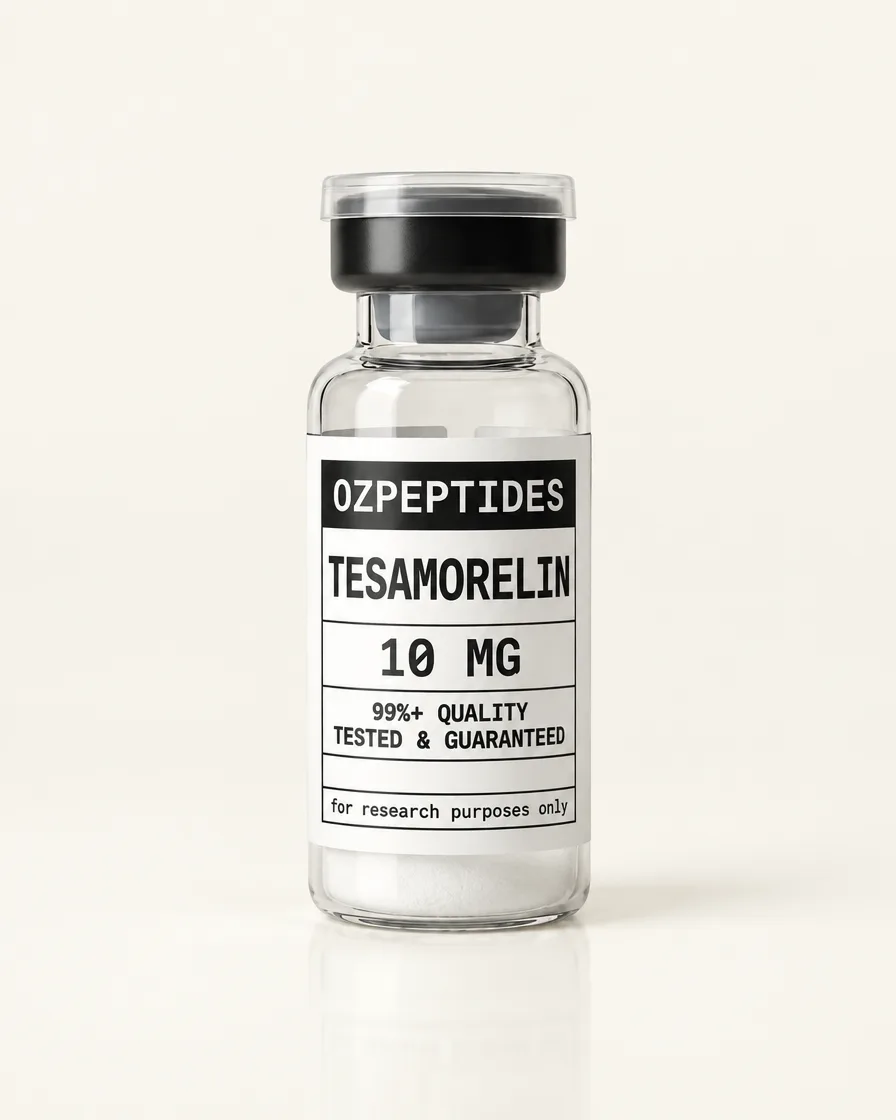
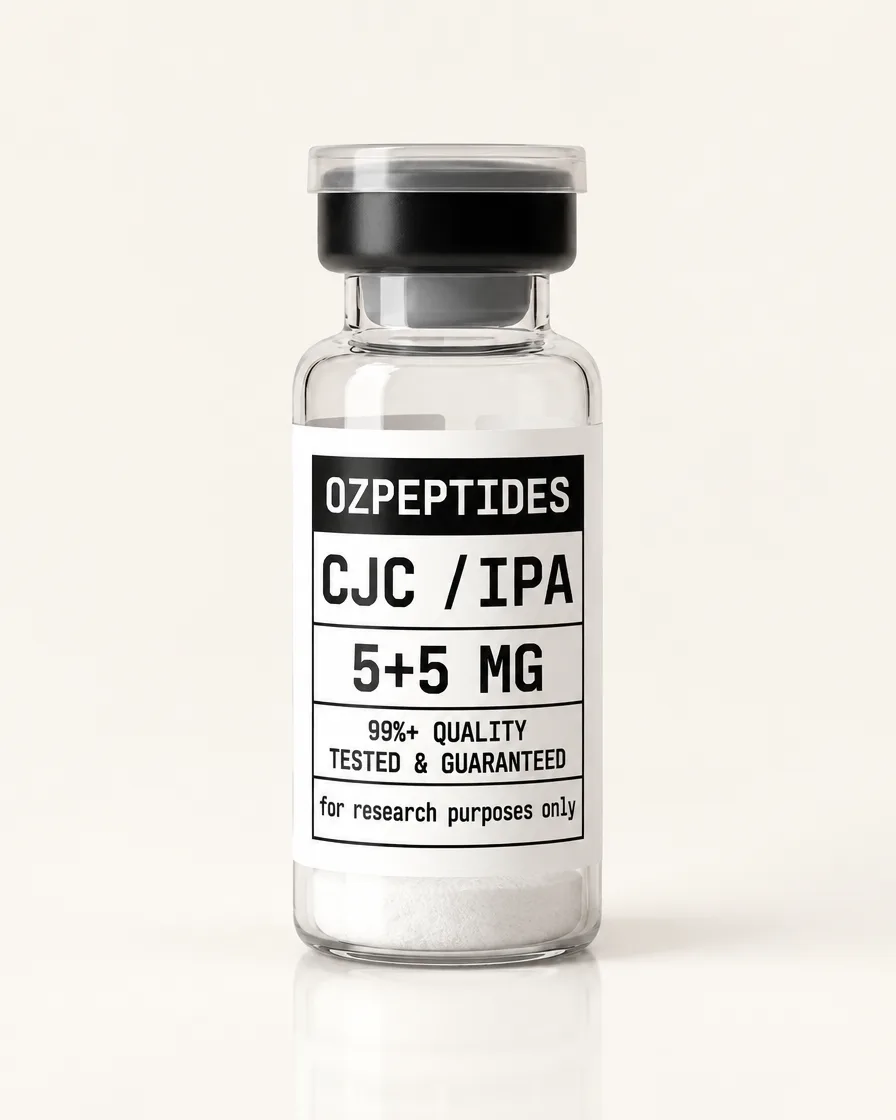
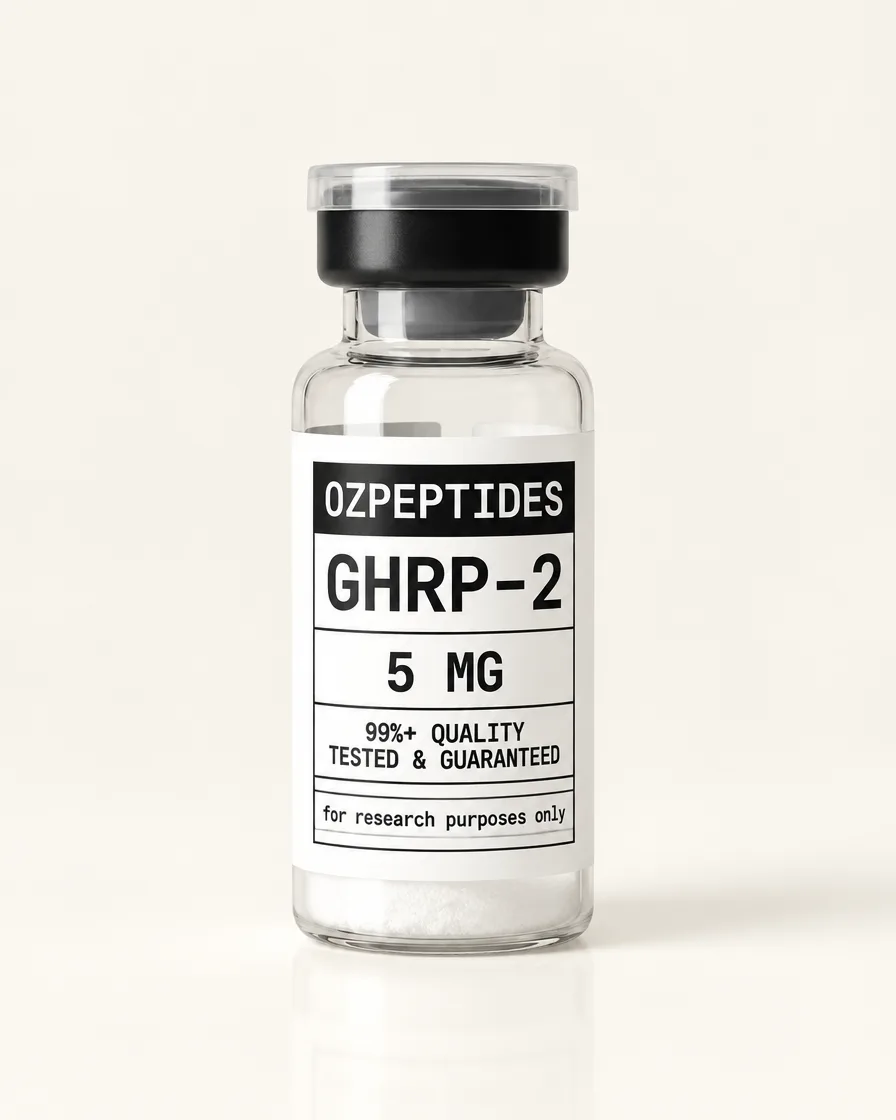
Tesamorelin and CJC-1295 act on the accelerator, as GHRH analogues. Ipamorelin, GHRP-2 and GHRP-6 act on GHS-R1a, the ghrelin receptor, which both prompts release and reduces somatostatin tone. Pressing the accelerator while easing the brake is the mechanistic argument for combining the two classes, and it is why the CJC and ipamorelin pairing exists.
Because all of these act on the pituitary rather than replacing the hormone, IGF-1 feedback stays intact and the ceiling is the gland's own capacity rather than the amount administered.
Selectivity is what separates the secretagogues
The growth hormone-releasing peptides came out of Cyril Bowers' work in the 1980s and 90s, before the ghrelin receptor had been identified — their activity implied a receptor nobody had found, which is how the field arrived at ghrelin in 1999.
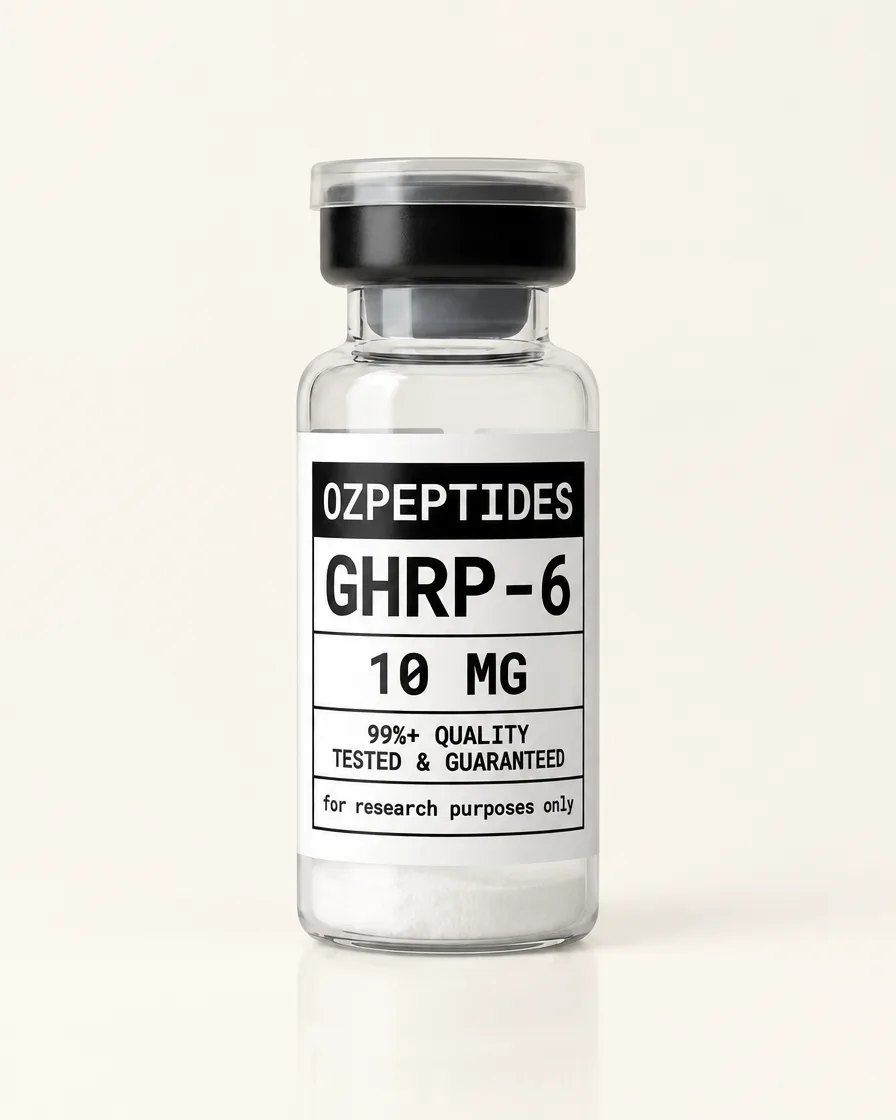
GHRP-6 stimulates appetite markedly, which is unsurprising given it activates the receptor ghrelin uses. Both GHRP-6 and GHRP-2 raise cortisol and prolactin alongside growth hormone. In a study where those hormones are variables rather than the subject, that is a confound rather than a side effect.
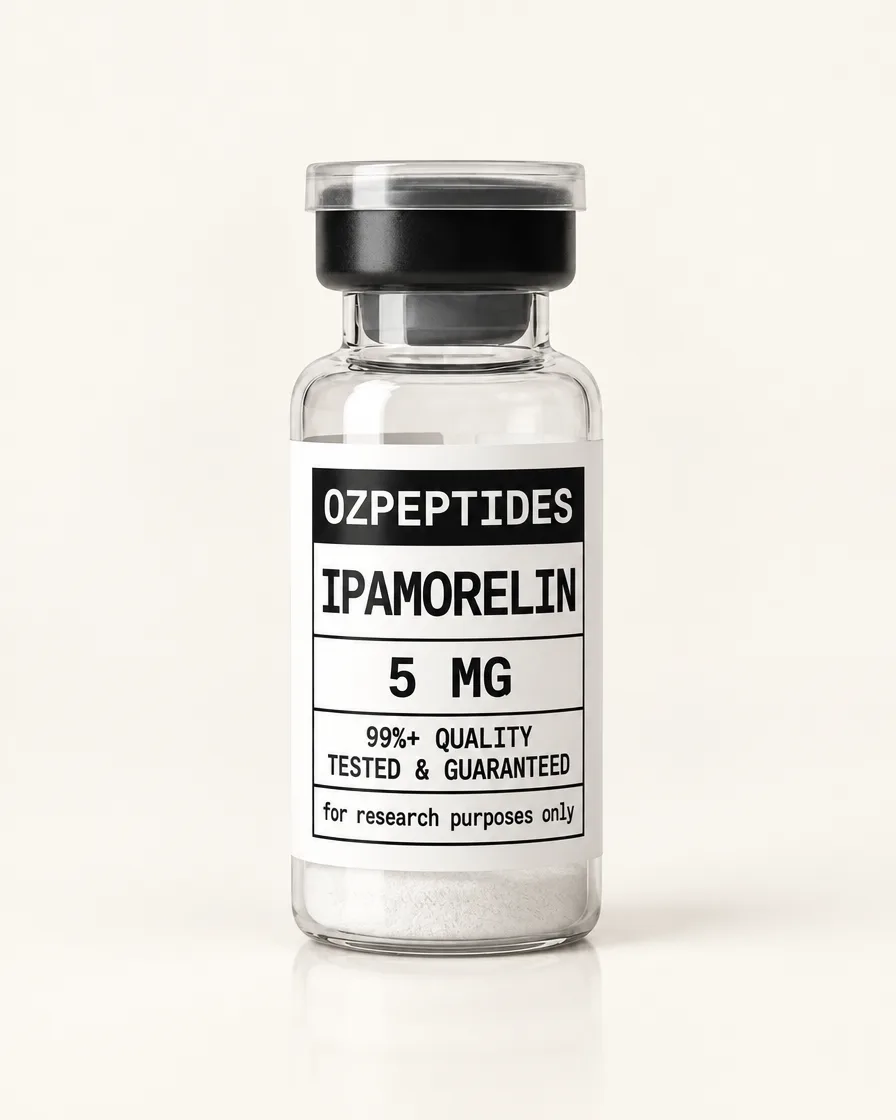
Ipamorelin was developed at Novo Nordisk specifically to remove it, and the 1998 paper describes it as the first selective growth hormone secretagogue. That selectivity is the entire reason it, rather than GHRP-6, is the usual partner for a GHRH analogue.
Where the evidence is
Tesamorelin is the standout: approved in the United States as Egrifta since 2010, for HIV-associated lipodystrophy, with a registrational trial programme behind it. It is not registered in Australia, and approval in one jurisdiction does not transfer.
Ipamorelin has a clinical programme in postoperative ileus that did not lead to approval, plus preclinical bone-density work. GHRP-2 has been used as a diagnostic agent for testing pituitary reserve in some jurisdictions. CJC-1295's published data largely belongs to the long-acting DAC version, not the DAC-free version usually sold.
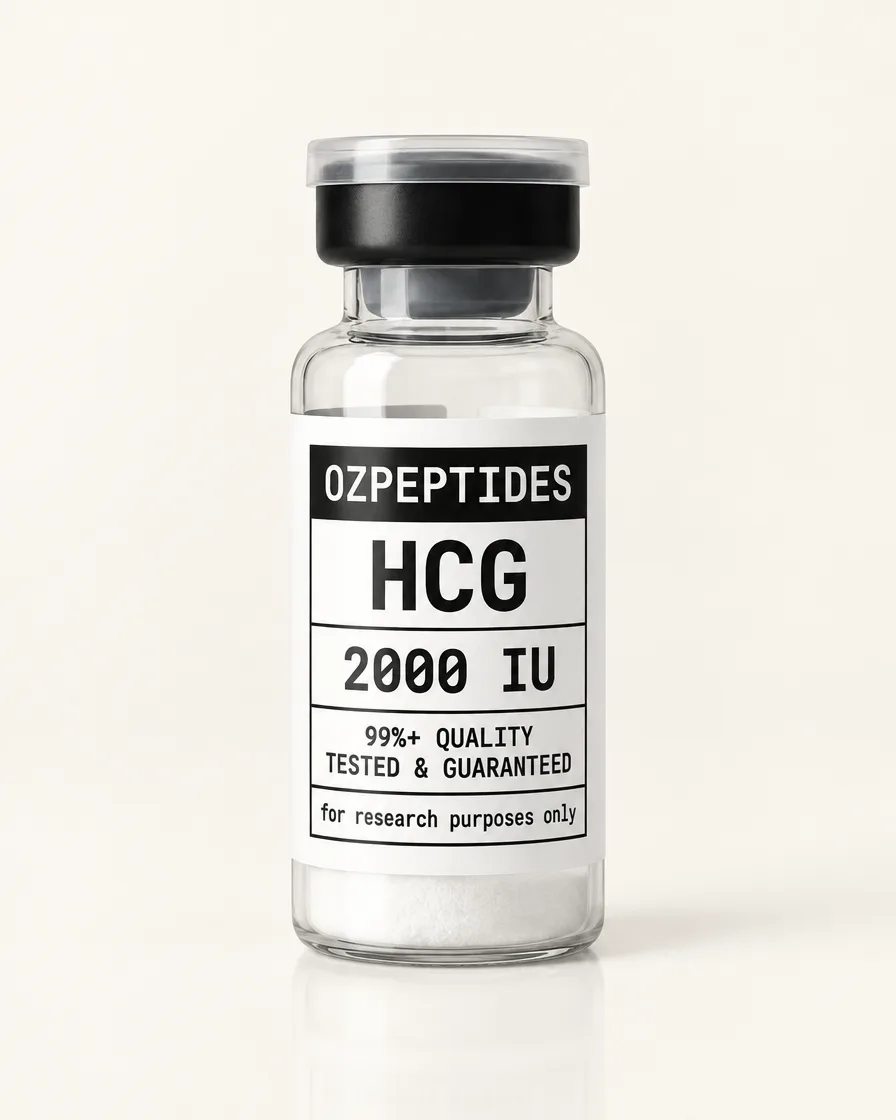
hCG is a registered prescription medicine in Australia with decades of obstetric and fertility use, which makes it the only compound in this category with an Australian registration.
The CJC-1295 DAC problem
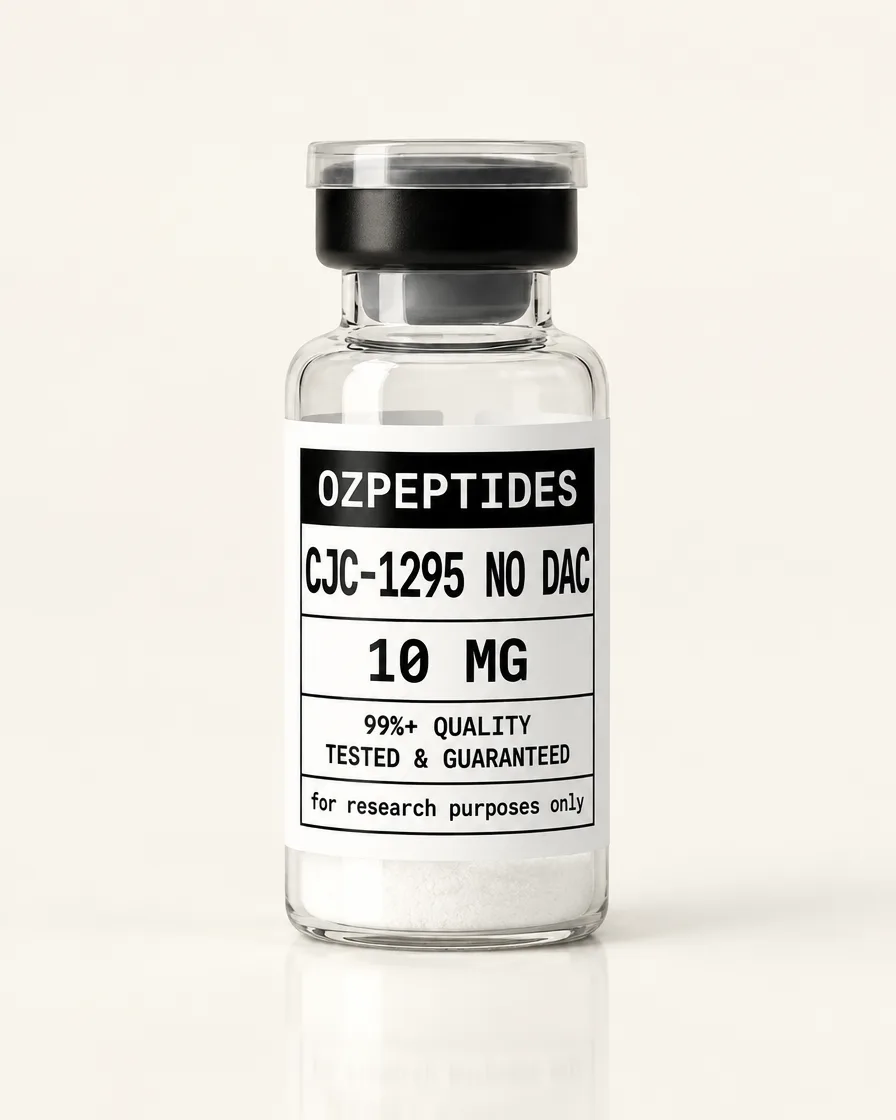
CJC-1295 originally described the version carrying a drug affinity complex — a maleimide linker that binds albumin and extends the half-life to days. The DAC-free version, modified GRF(1-29), clears in around half an hour and produces a pulse instead.
They share a name and are different pharmacological propositions, and the published clinical data on one does not describe the other. Commercially this is the most confused label in the range. The linker changes the molecular weight, so mass spectrometry settles which is in the vial — and a supplier who cannot say which they are selling is telling you something.
Anti-doping status
WADA S2 covers growth hormone secretagogues explicitly, including GHRH and its analogues and ghrelin receptor agonists, prohibited at all times in and out of competition. Anti-doping laboratories screen specifically for this class and have established detection methods.
That covers tesamorelin, CJC-1295, ipamorelin, GHRP-2, GHRP-6 and both blends. hCG is listed separately and sex-specifically: prohibited in males at all times, reflecting its stimulation of testicular testosterone production. Tesamorelin being an approved medicine in the United States does not exempt it — approval and prohibition are separate questions.
What to check before buying
The secretagogues are sold alongside each other at similar prices and are easily substituted, and no purity assay distinguishes them. Swapping GHRP-6 for ipamorelin changes the collateral hormone profile entirely while testing clean — a subtle failure that produces results about a different compound rather than wrong results. Mass spectrometry is the check that matters.
hCG needs a different framework altogether. It is a glycoprotein, not a synthetic peptide, so identity and potency are established by bioassay or immunoassay and it is quantified in international units rather than milligrams. A certificate reporting only a percentage purity for hCG is using the wrong measure.
Frequently asked
Why are CJC-1295 and ipamorelin used together?
They act on different arms of the same system — GHRH receptor and ghrelin receptor — and class-level synergy has been documented since 1990. The specific blend has not been trialled.
What makes ipamorelin different from GHRP-6?
Selectivity. It releases growth hormone without the marked cortisol, prolactin and appetite response the older GHRPs produce.
Are all of these banned in sport?
Yes. WADA S2 covers growth hormone secretagogues, and hCG is listed separately as prohibited in males at all times.
Which version of CJC-1295 is sold here?
The DAC-free version, modified GRF(1-29). The linker changes the molecular weight, so mass spectrometry confirms it.
Growth
GH secretagogues and GHRH analogues for growth research.
Seven compounds acting on the growth hormone axis, plus hCG, which acts on the reproductive axis instead. The secretagogues divide into GHRH analogues and ghrelin receptor agonists, and the distinction matters: they press different parts of the same system, which is why they are so often paired. Every compound here is prohibited in sport.
How the axis works
Growth hormone release from the pituitary is governed by an accelerator and a brake. GHRH from the hypothalamus promotes release; somatostatin restrains it. Output is pulsatile because those signals alternate rather than sit constant, and pulsatility matters — sustained elevation downregulates receptors and is associated with the adverse-effect profile of exogenous growth hormone.
Tesamorelin and CJC-1295 act on the accelerator, as GHRH analogues. Ipamorelin, GHRP-2 and GHRP-6 act on GHS-R1a, the ghrelin receptor, which both prompts release and reduces somatostatin tone. Pressing the accelerator while easing the brake is the mechanistic argument for combining the two classes, and it is why the CJC and ipamorelin pairing exists.
Because all of these act on the pituitary rather than replacing the hormone, IGF-1 feedback stays intact and the ceiling is the gland's own capacity rather than the amount administered.
Selectivity is what separates the secretagogues
The growth hormone-releasing peptides came out of Cyril Bowers' work in the 1980s and 90s, before the ghrelin receptor had been identified — their activity implied a receptor nobody had found, which is how the field arrived at ghrelin in 1999.
GHRP-6 stimulates appetite markedly, which is unsurprising given it activates the receptor ghrelin uses. Both GHRP-6 and GHRP-2 raise cortisol and prolactin alongside growth hormone. In a study where those hormones are variables rather than the subject, that is a confound rather than a side effect.
Ipamorelin was developed at Novo Nordisk specifically to remove it, and the 1998 paper describes it as the first selective growth hormone secretagogue. That selectivity is the entire reason it, rather than GHRP-6, is the usual partner for a GHRH analogue.
Where the evidence is
Tesamorelin is the standout: approved in the United States as Egrifta since 2010, for HIV-associated lipodystrophy, with a registrational trial programme behind it. It is not registered in Australia, and approval in one jurisdiction does not transfer.
Ipamorelin has a clinical programme in postoperative ileus that did not lead to approval, plus preclinical bone-density work. GHRP-2 has been used as a diagnostic agent for testing pituitary reserve in some jurisdictions. CJC-1295's published data largely belongs to the long-acting DAC version, not the DAC-free version usually sold.
hCG is a registered prescription medicine in Australia with decades of obstetric and fertility use, which makes it the only compound in this category with an Australian registration.
The CJC-1295 DAC problem
CJC-1295 originally described the version carrying a drug affinity complex — a maleimide linker that binds albumin and extends the half-life to days. The DAC-free version, modified GRF(1-29), clears in around half an hour and produces a pulse instead.
They share a name and are different pharmacological propositions, and the published clinical data on one does not describe the other. Commercially this is the most confused label in the range. The linker changes the molecular weight, so mass spectrometry settles which is in the vial — and a supplier who cannot say which they are selling is telling you something.
Anti-doping status
WADA S2 covers growth hormone secretagogues explicitly, including GHRH and its analogues and ghrelin receptor agonists, prohibited at all times in and out of competition. Anti-doping laboratories screen specifically for this class and have established detection methods.
That covers tesamorelin, CJC-1295, ipamorelin, GHRP-2, GHRP-6 and both blends. hCG is listed separately and sex-specifically: prohibited in males at all times, reflecting its stimulation of testicular testosterone production. Tesamorelin being an approved medicine in the United States does not exempt it — approval and prohibition are separate questions.
What to check before buying
The secretagogues are sold alongside each other at similar prices and are easily substituted, and no purity assay distinguishes them. Swapping GHRP-6 for ipamorelin changes the collateral hormone profile entirely while testing clean — a subtle failure that produces results about a different compound rather than wrong results. Mass spectrometry is the check that matters.
hCG needs a different framework altogether. It is a glycoprotein, not a synthetic peptide, so identity and potency are established by bioassay or immunoassay and it is quantified in international units rather than milligrams. A certificate reporting only a percentage purity for hCG is using the wrong measure.
Frequently asked
Why are CJC-1295 and ipamorelin used together?
They act on different arms of the same system — GHRH receptor and ghrelin receptor — and class-level synergy has been documented since 1990. The specific blend has not been trialled.
What makes ipamorelin different from GHRP-6?
Selectivity. It releases growth hormone without the marked cortisol, prolactin and appetite response the older GHRPs produce.
Are all of these banned in sport?
Yes. WADA S2 covers growth hormone secretagogues, and hCG is listed separately as prohibited in males at all times.
Which version of CJC-1295 is sold here?
The DAC-free version, modified GRF(1-29). The linker changes the molecular weight, so mass spectrometry confirms it.